
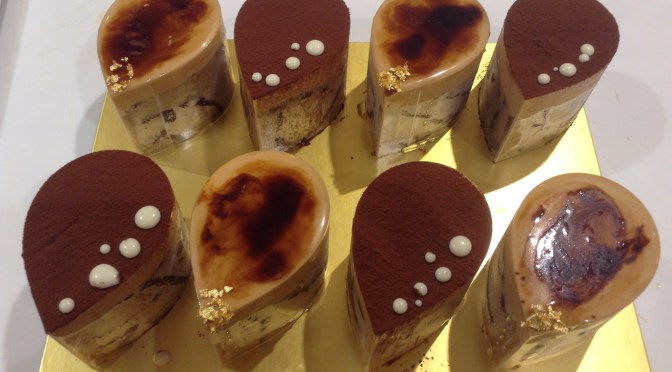
![IMG_0191[1]](https://pandasamurai.net/wp-content/uploads/2014/06/img_01911.jpg) Today we learned how to make these really nice cakes filled with a caramel mousse and flavored with coffee and cocoa. The bottom part is a light cake line-decorated with chocolate.
Today we learned how to make these really nice cakes filled with a caramel mousse and flavored with coffee and cocoa. The bottom part is a light cake line-decorated with chocolate.
All posts by Jennifer

Hydrangeas in Season~
![IMG_0186[1]](https://pandasamurai.net/wp-content/uploads/2014/06/img_01861.jpg) It’s June and the hydrangeas, or ajisai, are blooming in beautiful shades of blue, yellow and even purple! These are some blossoms I just happened to come across on my way home from work (it was a nice day so I decided to walk).
It’s June and the hydrangeas, or ajisai, are blooming in beautiful shades of blue, yellow and even purple! These are some blossoms I just happened to come across on my way home from work (it was a nice day so I decided to walk).
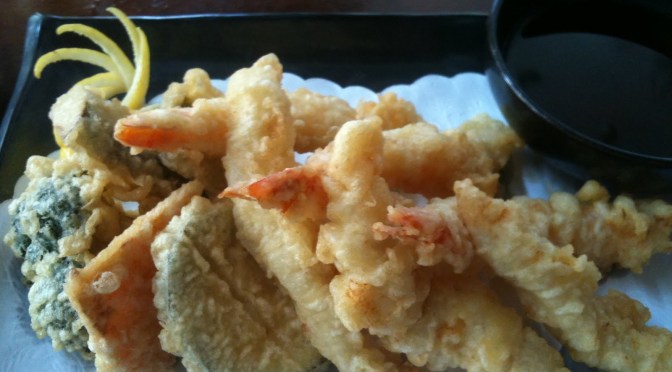
RECIPE: 野菜の天ぷら – Vegetable Tempura
How to Make Vegetable Tempura
Ingredients
- ¼ cup Kaeshi
- 2 cup Dashi
- Tempura Flour
- Vegetables, Sliced or Cut into small pieces (can be whatever you like!) Here are some of my personal recommendations: Broccoli, Asparagus, Carrots, Zucchini, Mushrooms…
- Canola Oil or Vegetable Oil for Deep-Frying
Directions
- For the dipping sauce, heat the kaeshi and dashi over medium heat until it comes to a gentle simmer. Turn off the heat and divide the sauce into 4 small bowls.
- Heat the oil in a wok or a deep pot (about 4 inches deep) to 340 degrees Farenheit.
- Prepare the tempura batter by mixinh ½ cup flour with about 6 tablespoons cold water. The texture of the batter should be similar to crepe batter.
- Dredge the vegetables in (dry) tempura flour, then dip each into the tempura batter. Shake gently to remove excess batter and then drop into the heated oil. Vegetables should cover only half of the surface area of the oil. Wait for them to rise to the top of the oil and cook until lightly golden and crisp.
- When finished, take out of the oil and let it rest on a plate covered with paper towels to soak up the excess oil. Remove paper towel, and serve on plate with a bowl of dipping sauce on the side.
- Tempura is best eaten quickly before it gets soggy, so once prepared, make sure to enjoy it right away!
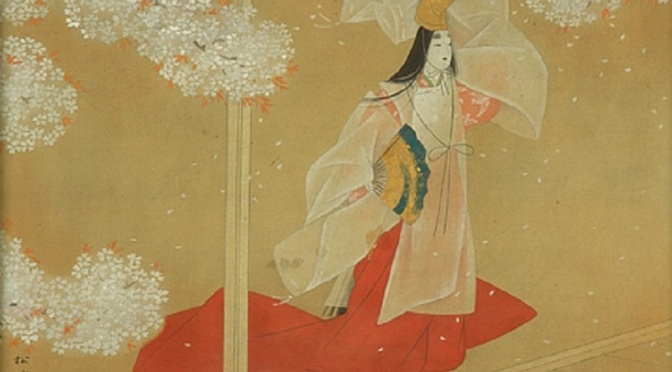
Women of the Floating World: Shizuka Gozen
The Dancing Women of Kyoto
Even at the height of Heian promiscuity, when noblemen had no problem finding a companion for the night and flitted merrily from one woman’s chamber to another, there were also prostitutes who offered a different sort of pleasure.
At one end of the scale were ordinary prostitutes who wandered the streets, waterways, hills, and woods and were referred to as “wandering women,” “floating women,” or “play women”.
At the other extreme were cultivated, refined professionals whom in English we might call courtesans. Some were of good family, fallen upon hard times. Others were noted for their beauty, brilliance, or talent. Skilled musicians, dancers, and singers, they were often the invited guests and chosen companions of the aristocrats. These high-class courtesans were the original precursors of the geisha and the oiran.
 The most popular of these courtesans were the shirabyoshi (“white rhythm”) dancing women. To heighten their allure, they cross-dressed in white male clothing and manly court caps. They carried swords like men and performed highly charged erotic songs and dances to music with a rhythmic beat. Like the supermodels and rock singers of today, they were stars and the chosen companions of the country’s most powerful men.
The Last Dance of Shizuka Gozen
The most celebrated of all shirabyoshi was Shizuka Gozen, the concubine of the 12th century legendary hero Minamoto no 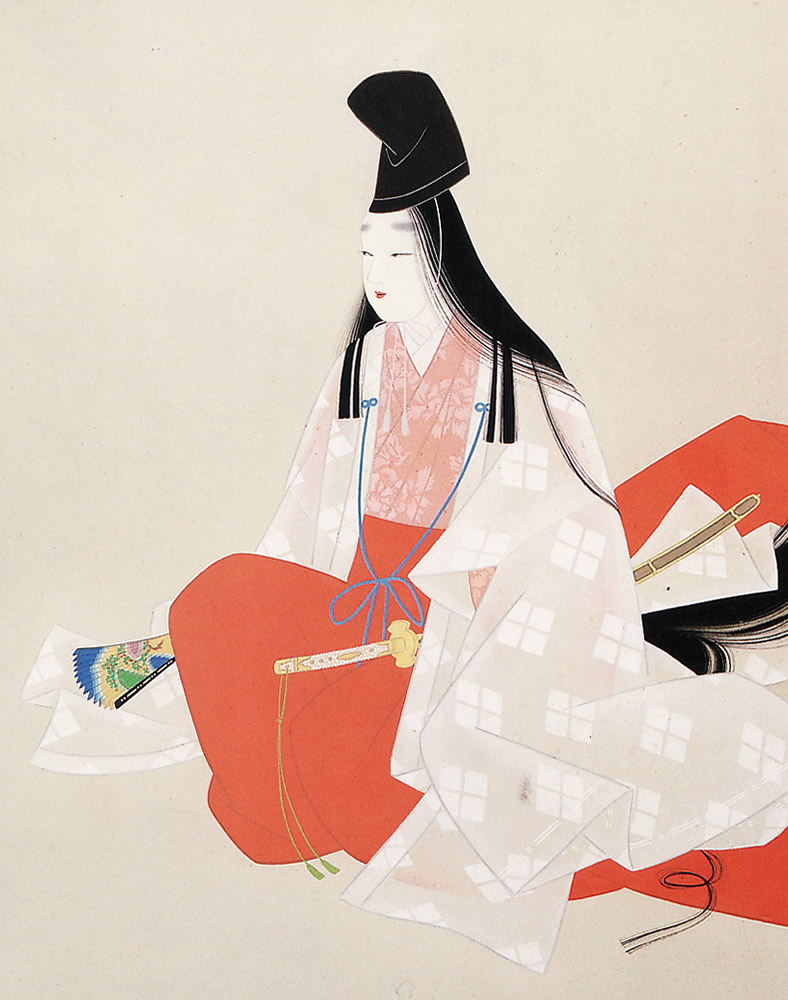 Yoshitsune. She was renowned throughout the country for extraordinary beauty and also for the power of her dancing. In Japan, dance began as a way of supplicating the gods, (but eventually transformed in later times to be equated with prostitution) and once, when the country had been suffering from drought for a hundred days, the gods responded by sending rain as soon as Shizuka began to dance – or so goes the legend. Centuries later, when the geisha first appeared, they would claim Shizuka Gozen as their ancestor.
Like most women in Japanese literature, history, and legend, Shizuka Gozen’s story is famous because of how that story ended. In 1185, when her lover, Minamoto no Yoshitsune, was forced to flee Kyoto and escape from his older brother and the new Shogun, Yoritomo, Shizuka Gozen accompanied him. However, Yoshitsune eventually sent her and the rest of his entourage back as it was only slowing him down.
Soon after Shizuka was captured and brought before Yoritomo. There she was interrogated as to Yoshitsune’s whereabouts. But, being plucky as well as beautiful – characteristics which would come to distinguish the geisha too – she refused to give anything away.
Yoritomo then forced her to dance for him, intending to intimidate and frighten the 18-year-old girl. But Shizuka did not flinch. Instead, she danced and sang a song full of praise for her lover, Yoshitsune, and longing to be at his side. This greatly angered Yoritomo, and he intended on having her put to death, but his wife, sympathetic to the young woman, begged for Shizuka’s life. With her help, Shizuka Gozen was finally released.

However, by this point it became apparent that Shizuka was pregnant with Yoshitsune’s child. Yoritomo declared that if it were a daughter she could live on peacefully, but if it were a son, he would have the child killed. Months later, she gave birth to a son, but again Yoritomo’s wife intervened and the child was spared but sent away to live with Shizuka’s mother.
Free to do as she pleased, Shizuka sought to follow her lover once more, but upon hearing of his death, she became a nun in Kyoto and died of grief. According to some tales, however, Shizuka was later killed along with her and Yoshitsune’s child, a son, by the order of Yoritomo.
Both the song and dance of Shizuka Gozen are famous, and are still performed to this day by geisha and actress alike.

Ishihara Satomi as Shizuka Gozen from NHK Taiga Drama Yoshitsune

Ishihara Satomi as Shizuka Gozen from NHK Taiga Drama Yoshitsune

Ishihara Satomi as Shizuka Gozen from NHK Taiga Drama Yoshitsune

Ishihara Satomi as Shizuka Gozen from NHK Taiga Drama Yoshitsune

Ishihara Satomi as Shizuka Gozen from NHK Taiga Drama Yoshitsune

REVIEW: 十三人の刺客 (三池崇史) – 13 Assassins (Miike Takashi)
First Thoughts
I’m a fan of Miike Takashi. Let me just put that out there first. I know many people, including Japanese associates, who cannot abide by his work, but I am indeed a fan. I am also an obsessed avid fan of samurai films, to the extent that I studied and conducted an independent study project on the genre in college. As a result, this movie was perhaps more up my alley from the get-go than other viewers. I will, however, try my best to be objective all things considered. So here goes.
13 Assassins is a remake of an older film (directed by Kudo Eiichi in 1963), which was in turn made in response to the original release of the Seven Samurai film. It is also supposedly based (very loosely) on actual events.
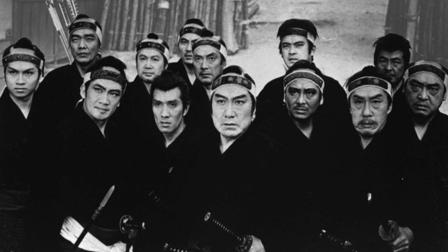
I watched 13 Assassins for the first time at the New York Asian Film Festival 2011, where we not only got to hear actor Yamada Takayuki speak, but we also got to see the original Japanese cut of the film.

When the film was released internationally, 15 minutes were omitted, so we got to see the movie as director Miike Takashi intended (I will get to what was different between the two cuts later). Continue reading REVIEW: 十三人の刺客 (三池崇史) – 13 Assassins (Miike Takashi)
RECIPE: みたらし団子 – Mitarashi Dango
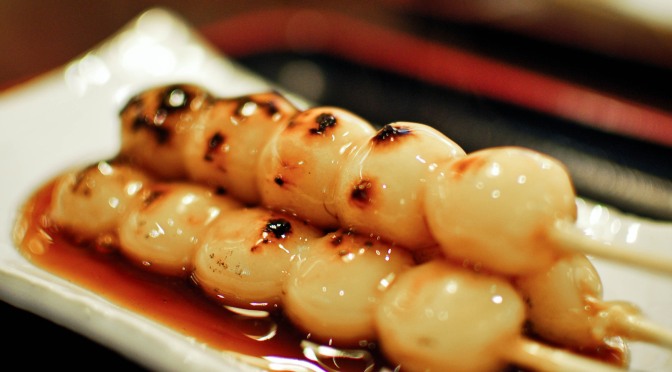
A popular Japanese sweet served in tea shops and in stalls for festivals, mitarashi dango is a kind of dango “dumpling” sweet skewered in groups of 3 to 5 pieces, covered with a sweet soy sauce glaze. It is characterized by its glaze and slightly burnt fragrance.
My version of mitarashi dango is a bit of a “cheat” and is designed to be easy to make. Unfortunately it is also pretty easy to screw up so it might take a few tries to get the hang of it and produce the desired result. But don’t give up, because these are extremely tasty!
How to Make Mitarashi Dango
Ingredients (Makes 8)
Dango:
- 1 cup Mochiko (Sweet Rice Flour)
- Water
Sauce:
- ½ cup Water
- 6 tablespoons Sugar
- 2 tablespoons Soy Sauce
- 1 tablespoon Potato Starch
Directions
- In a microwaveable bowl, add the mochiko rice flour and slowly add water little by little to make a smooth dough. BE VERY CAREFUL NOT TO MAKE THE DOUGH TOO WATERY.
- Roll into a long cylinder and cut into 24 pieces. Roll into small balls or dango, about 1 inch in diameter.
- Boil water in a pot and add the dango. After they come up to the surface, let them cook 1 more minute, then scoop them out into a colander to drain and cool slightly.
- For the sauce, combine water, sugar, and soy sauce in a sauce pan and bring to a boil. Make a slurry with the potato starch and 1 tablespoon of water, and drizzle into the sauce. Quickly whisk until it thickens. Feel free to adjust the proportions of soy sauce, sugar, etc. to your tastes. You can also make the sauce thicker or thinner by adjusting the water and potato starch.
- Twist and slide the dango onto skewers (3 for each skewer) and place them on a plate. Pour sauce over them and serve. ALTERNATIVELY, you can grill the skewered dango over a wire frame until they just start to burn a little on both sides, dip them in the sauce and serve.
 Panda Samurai