Category Archives: Writings

Chinese Folklore: Lingering Ghosts Beyond Ghost Month

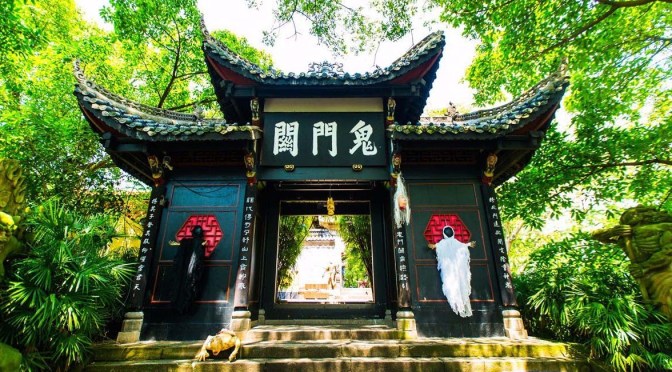
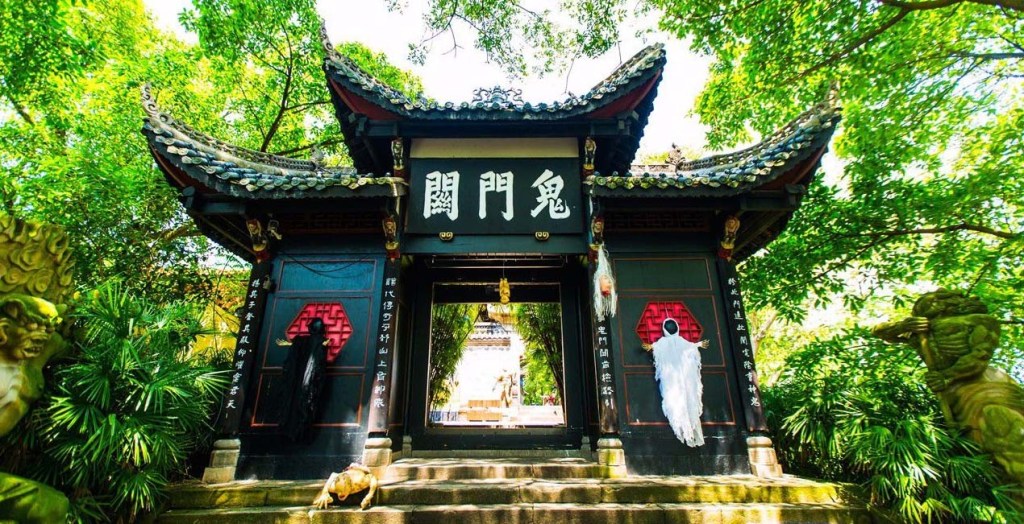
According to the Chinese lunar calendar, this year today, September 2nd, marks the end of the month of guǐ yuè (鬼月) or Ghost Month. While the 15th day of the month or Hungry Ghost Festival is considered to be the most important of times, the last day of the seventh month in the Chinese lunar calendar is also significant as it is when the doors to the underworld are closed once again, and the roaming spirits who have come to visit are sent back from whence they came.

Sending Back Spirits at the End of Ghost Month

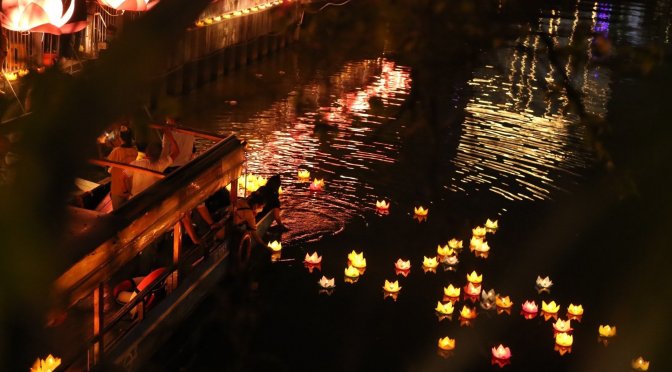
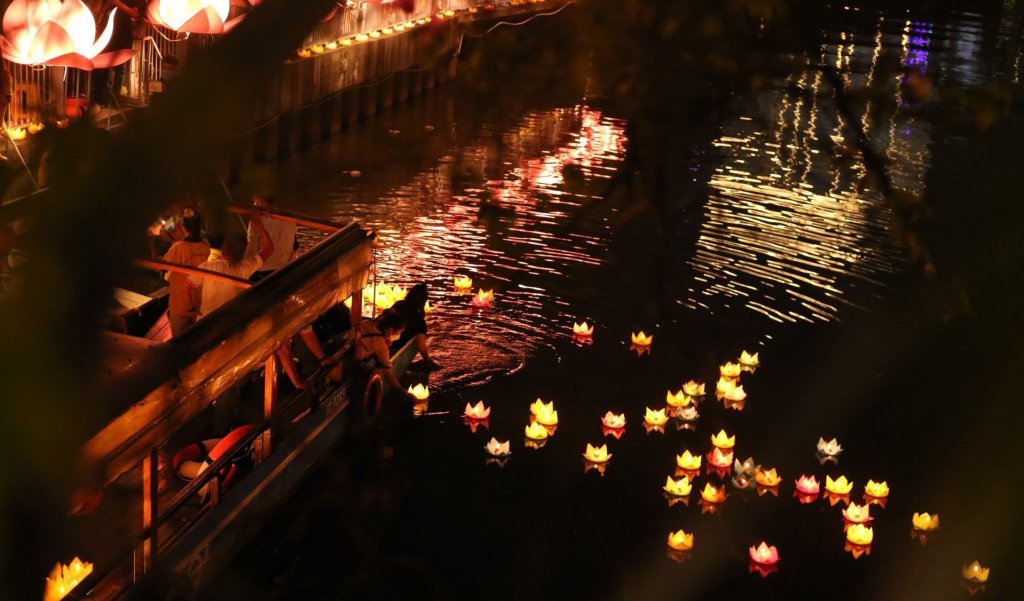
Traditionally, Taoist priests would perform chants to announce to the spirits that it was time for their return to the underworld, known as yīnjiān (陰間) or literally the “moon or hidden/shaded place”, and to drive them out from the world of the living, known in Taoism as yángjiān (陽間) or literally the “sun or open place” with the sound of their chanting. What is perhaps more familiar and common nowadays, however, is the lighting of lanterns, typically lotus-shaped, and floating them on lakes or rivers to guide those visiting spirits back to the underworld. Families will often write the names of ancestors believed to be visiting them on their lanterns to ensure they will be followed back. Many will burn further offerings fashioned out of joss paper such as money or other material possessions for ancestral spirits to take with them.

Aside from the lanterns floated explicitly for ancestral spirits, additional lanterns are made for any wandering ghosts, including those whose grievances were so strong that their souls were trapped in the world of the living, in hopes of guiding them to where they can be at peace. Despite one’s best efforts, however, some ghosts never make it back and remain in the world of the living, even well after the end of Ghost Month.

Continue reading Chinese Folklore: Lingering Ghosts Beyond Ghost Month
Chinese Folklore: The Hungry Ghost Festival

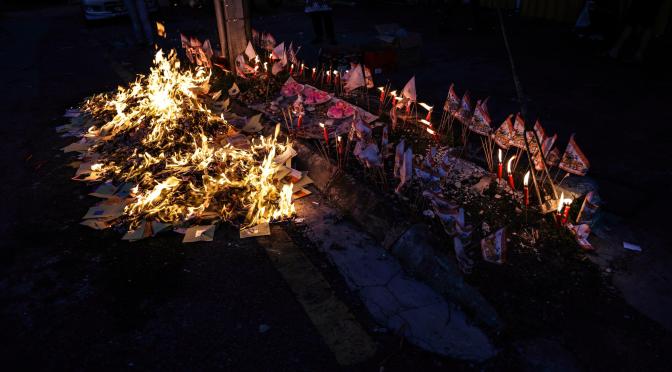
Although the month of guǐ yuè (鬼月) or Ghost Month is considered to be a highly superstitious and supernatural period overall, there are certain points in the month that are considered especially important when it comes to being mindful of the spirits believed to be freely roaming the world of the living. The foremost of which takes place on the 15th day of the month, which according to the Chinese lunar calendar takes place today, August 18th, this year. It is on this day that spiritual activity is believed to be at its peak.

This day is so significant that it is often distinguished from the rest of the month by being referred to as the “Hungry Ghost Festival” (sometimes just “Ghost Festival”), although this name is occasionally used for the entire month’s festivities.

Continue reading Chinese Folklore: The Hungry Ghost Festival

Chinese Folklore: Entering the Month of Ghosts (鬼月)

According to Chinese folklore, there are certain times when one must be especially careful of the supernatural, and this year today, August 4th, marks the beginning of guǐ yuè (鬼月) or “Ghost Month,” which is the seventh month of the Chinese lunar calendar.

Starting tonight at 11 PM through until September 2nd, it is believed that the doors of the underworld are open, and apparitions of all kinds are free to roam the world of the living. Those ancestral spirits who have families will visit their loved ones in their homes, while those ghosts who have none will wander the streets, seeking some form of relief, often in the form of food or entertainment.

Aside from mainland China and Hong Kong, Ghost Month is observed by a number of Asian countries, including Taiwan, Vietnam, Singapore, Malaysia, and the Philippines, with similar traditions seen in other countries like Thailand and Japan.

Continue reading Chinese Folklore: Entering the Month of Ghosts (鬼月)

REVIEW: たそがれ清兵衛 (山田洋次) – The Twilight Samurai (Yamada Yoji)

First Thoughts

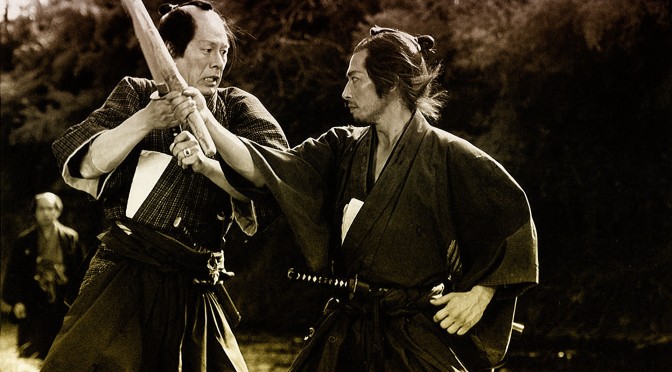
Directed by the highly esteemed Yamada Yoji (山田洋次), Twilight Samurai is one of many samurai films set in nineteenth-century feudal Japan. But unlike other films in this genre of Japanese cinema, which tend to be more action epics with lots of fighting, fountains of blood, and overriding themes of good versus evil or honor versus dishonor, Yamada Yoji paints a picture filled with intimate psychological drama that results in an engaging and truly touching movie.

Continue reading REVIEW: たそがれ清兵衛 (山田洋次) – The Twilight Samurai (Yamada Yoji)

PAPER: Mishima Yukio’s “Patriotism”

Written in December 2011 Wrote this paper based on my personal interest in Mishima Yukio's works, namely his short story "Patriotism" which he later adapted for film that he wrote, directed, and starred in as the lead role and how both works express Mishima's personal ideals and beliefs.

Mishima Yukio’s “Patriotism”: Of Death, Purity, Honor, and Love

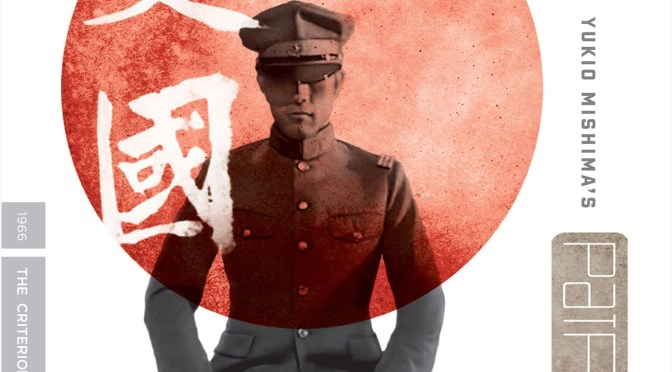
“Patriotism” is known to have been a story of personal significance to author Mishima Yukio, as he had expressed on multiple occasions how much of himself he had thrown into this particular story: “[Patriotism] embodies so many of my qualities as a writer, both the good and the bad.”  The fact that it is also the only work that Mishima handled personally when adapting it for film, as in directed, produced, wrote the screenplay, and starred in as lead actor, is testament to how important it was to him.  The film “Patriotism”, however, is not much of an adaptation in the conventional sense, and more of an expression of Mishima’s personal ideals and beliefs.  Especially in regards to Mishima’s views on the intimate relationship between death and “beauty”, which he considered synonymous with love, sex, and purity.  In both the story and the film, it is clear Mishima wanted to portray the act of seppuku as both “an act of beauty” and a purifying ritual.

Continue reading PAPER: Mishima Yukio’s “Patriotism”

Will You Be Mine? Making Chocolate for Valentine’s Day.

Russell Stover. Godiva. Lindt. It’s hard to beat standards like a box of chocolates as a gift for Valentine’s Day. Even today more than one billion dollars are spent on chocolates for this romantic holiday in the United States alone. In Japan,  it is a tradition for women to give chocolate to men on Valentine’s Day. There are generally two (now three) types of chocolate given: giri-choco (義理チョコ), or “obligatory chocolate,” honmei-choco (本命チョコ), or “true feelings chocolate,” and now recently tomo-choco (友チョコ), or “friendship chocolate.”

While the meaning behind honmei-choco and tomo-choco are pretty self-explanatory, the practice of giri-choco has become an increasingly contentious issue. In some workplaces, giri-choco has even been banned as it compels women to gift chocolate to men and puts them under unnecessary stress; many women have shared that they have often pulled all-nighters on the eve of Valentine’s Day to make enough for all of the men they had to give chocolate to. There have even been cases where the practice has been discouraged as many men have expressed that they do not even want chocolate, especially as it is widely expected for such gifts to be reciprocated a month later on White Day, when it is tradition for men to present gifts to women. As a result, more and more often women have purchased inexpensive candy bars as giri-choco rather than pricey brand-name gifts, fewer still make them by hand. In the case of honmei-choco (and sometimes even tomo-choco), however, many women make these chocolates themselves as it is commonly held that one’s feelings are not true if they are in the form of ready-made, store-bought chocolate.

Why not make a sweet gift like no other yourself this year? By following these simple tips, you can not only tailor your selection of chocolates to your intended’s tastes, but you can also leave an impression that he or she will not forget for quite some time!

Continue reading Will You Be Mine? Making Chocolate for Valentine’s Day.