
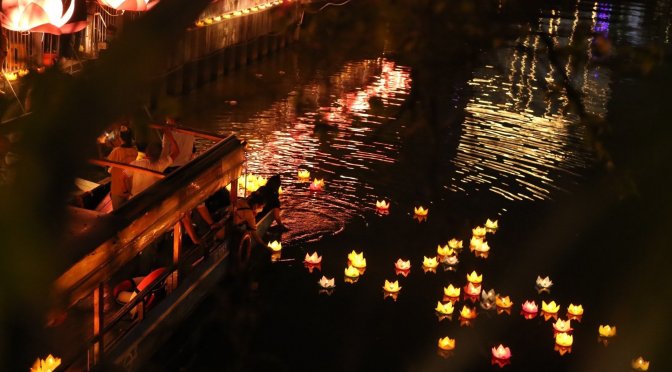
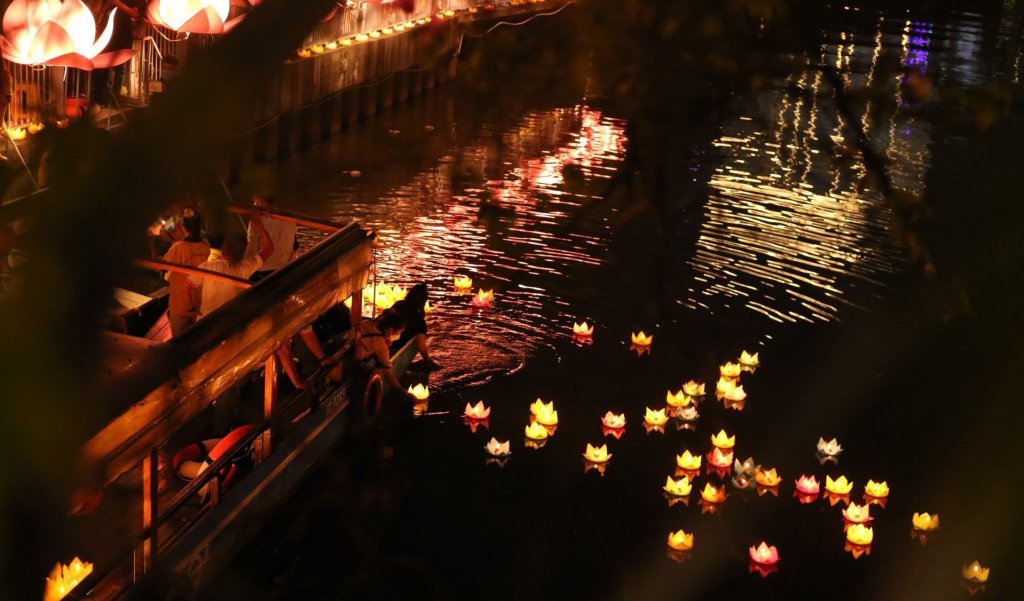
According to the Chinese lunar calendar, this year today, September 2nd, marks the end of the month of guǐ yuè (鬼月) or Ghost Month. While the 15th day of the month or Hungry Ghost Festival is considered to be the most important of times, the last day of the seventh month in the Chinese lunar calendar is also significant as it is when the doors to the underworld are closed once again, and the roaming spirits who have come to visit are sent back from whence they came.
Sending Back Spirits at the End of Ghost Month
Traditionally, Taoist priests would perform chants to announce to the spirits that it was time for their return to the underworld, known as yīnjiān (陰間) or literally the “moon or hidden/shaded place”, and to drive them out from the world of the living, known in Taoism as yángjiān (陽間) or literally the “sun or open place” with the sound of their chanting. What is perhaps more familiar and common nowadays, however, is the lighting of lanterns, typically lotus-shaped, and floating them on lakes or rivers to guide those visiting spirits back to the underworld. Families will often write the names of ancestors believed to be visiting them on their lanterns to ensure they will be followed back. Many will burn further offerings fashioned out of joss paper such as money or other material possessions for ancestral spirits to take with them.
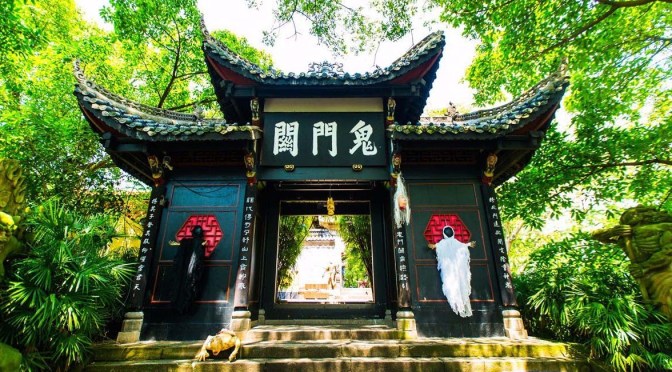
Aside from the lanterns floated explicitly for ancestral spirits, additional lanterns are made for any wandering ghosts, including those whose grievances were so strong that their souls were trapped in the world of the living, in hopes of guiding them to where they can be at peace. Despite one’s best efforts, however, some ghosts never make it back and remain in the world of the living, even well after the end of Ghost Month.
Continue reading Chinese Folklore: Lingering Ghosts Beyond Ghost Month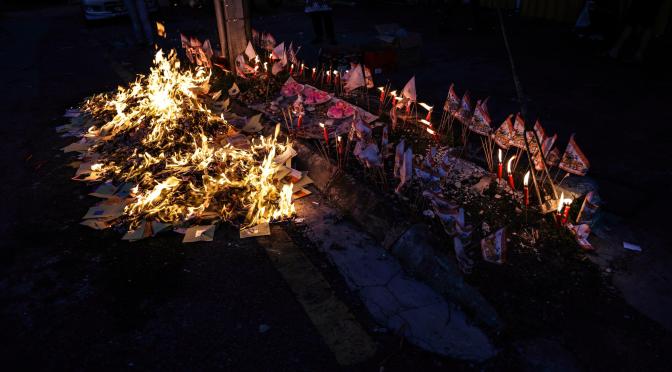




 Panda Samurai