Written in February 2010 Wrote this while studying Otomo Katsuhiro's anime films in-depth. WARNING: Possible spoilers for the films!
From City to City: Otomo Katsuhiro and the Potential Desensitization of Humankind
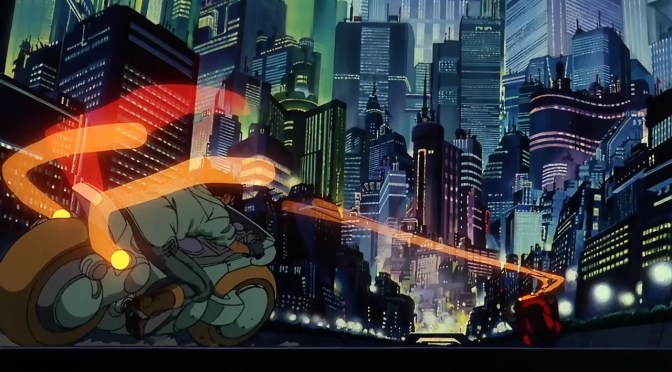
Susan Napier has asserted that most anime titles contain three elements: the apocalyptic, matsuri (“festival”), and elegiac. Well-known Japanese director and screenwriter, Otomo Katsuhiro, who is most well known for his works Akira and Metropolis, incorporates all three elements into both of these films. However, he uses these elements, the apocalyptic element in particular, to express a common underlying thread throughout all of his works: the fear of desensitization that may lie in humankind’s future. Continue reading PAPER: From City to City→
Written in December 2009 Wrote this after viewing the wonderful film "The Twilight Samurai" (directed by Yamada Yoji). Initially wrote a short review but ended up wanting to write something more in-depth. WARNING: Possible spoilers for the film!
Twilight Samurai: Born a Samurai, Live a Father, Die a Samurai
The Conflict Between Duty and Family Within Iguchi Seibei
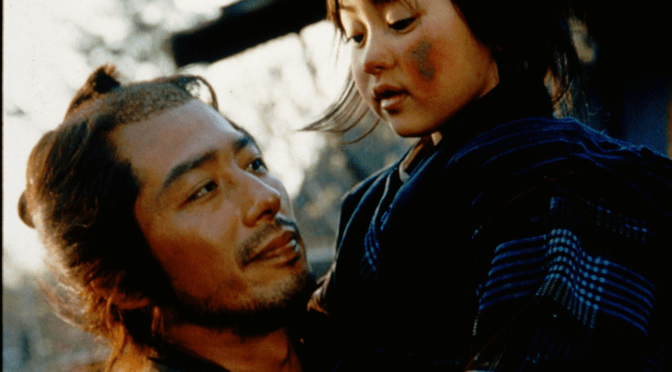
Even to the casual viewer, it is obvious that Twilight Samurai is different from many other samurai-themed films. A clear indication of this is the fact that there are only two duel scenes in the entire film. It instead concentrates on showing the main character’s everyday struggles. Director Yamada Yoji makes his intentions regarding Twilight Samurai particularly clear in an interview, where he draws a parallel between modern Japanese workers who have devoted or sacrificed their lives for the sake of the company and samurai of the Tokugawa period. He states, “Isn’t losing one’s life fighting for the domain or for your country totally meaningless? I wanted to depict a samurai who has another basis for life.” (Muranaka 7) This is his motivation behind constructing the character “Twilight” Seibei. He is unkempt, lacks ambition, and to his associates a mockery of the samurai ideal. And yet, Yamada depicts him as a man far nobler than any other, for Seibei indeed lives for another purpose: his family. And in so doing he shows that Seibei is in fact able to accomplish, contrary to the views of others, being both a good samurai and an excellent father. Continue reading PAPER: Twilight Samurai→
Written in November 2009 Wrote this after studying Japanese cinema and traditional theater. WARNING: Possible spoilers for the film!
Throne of Blood Unmasked: Shakespeare Transposed for Noh Theatre and Japan
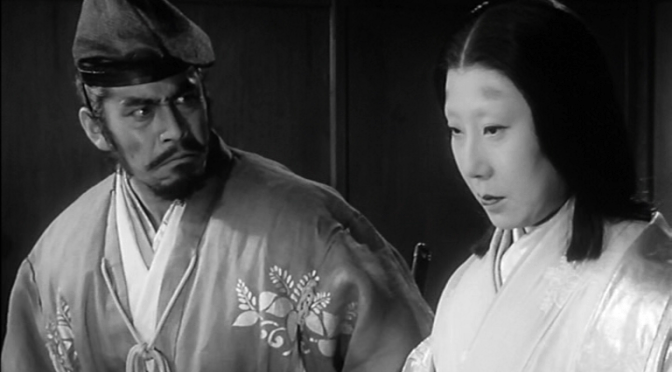
Critics commonly describe ThroneofBlood as Kurosawa Akira’s adaptation of Macbeth. While this description is certainly not untrue, it hardly begins to suggest the ways in which the film is so much more than a literary adaptation. When viewed objectively, the film resembles the Shakespearean theatrical play very little. Stripped of all of its dramatic dialogue and soliloquies, Kurosawa compresses Macbeth, and replaces its elegant words with sound, stylized movements, atmosphere, and imagery of the Noh theatre. By incorporating elements of the classical Noh theatre into Throne of Blood, Kurosawa transforms the Macbeth story into something undeniably Japanese and also cinematic.Continue reading PAPER: Throne of Blood Unmasked→
Written in May 2009 I wrote this paper based on my research on Shinto (sp. Inari) and East Asian folklore regarding the fox. I was fascinated by Fushimi Inari Taisha, and I was familiar with the kitsune as well as Shinto, so I started researching Inari and fox lore in more detail.
Through the Eyes of the Fox: Japan’s Connections with Korea through Inari Worship and the Plausible Influence on Shinto Religion
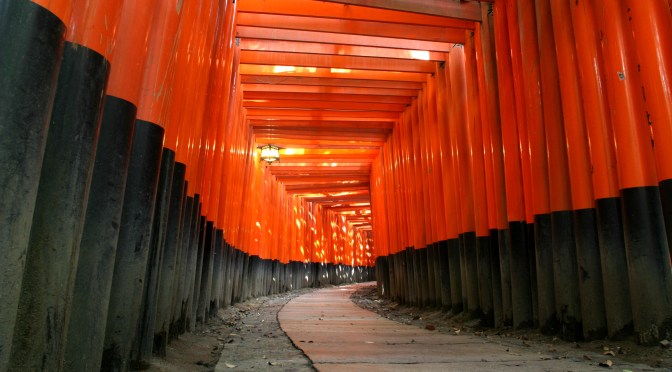
As the sunlight fades and dusk creeps in, an air of eerie tranquility settles on the shrine complex. Passing underneath thousands of vermillion torii gates, it seems like a tunnel leading to another world. And everywhere one looks there is the expectation for a slender, lithe vulpine creature with a luxurious tail to suddenly appear and lope through the trees. Such is the atmosphere at Fushimi Inari Taisha, the head shrine of Inari, one of Shinto’s most diverse and popular kami. One of the most unique aspects of Inari worship that is often overlooked is its strong connections to the Korean peninsula, which are most distinctly seen in its origins and the central symbol of Inari, the fox. Given how prominent Inari worship is, how the Korean impact on it may have influenced Shinto beliefs in general is also worth examining. Continue reading PAPER: Through the Eyes of the Fox→
Written in April 2009 Wrote this based on my research on Zen Buddhism and my love for samurai.
Heart of the Sword: The Relationship Between the Samurai and Zen Buddhism
Surrounded on all sides by an emerald green bamboo grove, a figure stands silently in the center. His eyes are closed, his body poised. Leaves break free from the bamboo trees and drift down. Hearing them flutter, his eyes snap open and he draws his katana. In a flash of light, the leaves are sliced cleanly in two. One would think he is a peerless warrior; they would never guess how hard his heart pounds when he has to charge into battle on horseback. And so he is headed to where he can learn the necessary skills to turn his soul into steel as sharp his blade: a monastery. Zen Buddhism has been often referred to as the “religion” of the samurai, but upon examination it becomes apparent that the samurai’s interest in Zen comes purely from a warrior’s perspective. Despite this, the bond between them is so significant that both Zen and the samurai have been mutually influenced by their interaction, although in slightly different ways. And even centuries after the samurai’s practical need for Zen has waned, Zen is still heavily associated with the samurai and Japanese culture today. Continue reading PAPER: Heart of the Sword→

 Panda Samurai