Category Archives: Papers

PAPER: Mishima Yukio’s “Patriotism”

Written in December 2011 Wrote this paper based on my personal interest in Mishima Yukio's works, namely his short story "Patriotism" which he later adapted for film that he wrote, directed, and starred in as the lead role and how both works express Mishima's personal ideals and beliefs.

Mishima Yukio’s “Patriotism”: Of Death, Purity, Honor, and Love

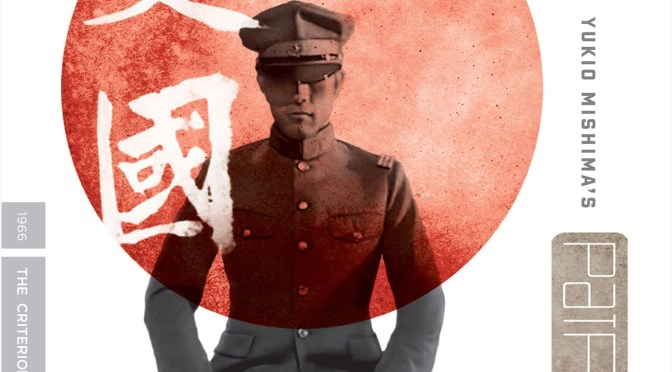
“Patriotism” is known to have been a story of personal significance to author Mishima Yukio, as he had expressed on multiple occasions how much of himself he had thrown into this particular story: “[Patriotism] embodies so many of my qualities as a writer, both the good and the bad.”  The fact that it is also the only work that Mishima handled personally when adapting it for film, as in directed, produced, wrote the screenplay, and starred in as lead actor, is testament to how important it was to him.  The film “Patriotism”, however, is not much of an adaptation in the conventional sense, and more of an expression of Mishima’s personal ideals and beliefs.  Especially in regards to Mishima’s views on the intimate relationship between death and “beauty”, which he considered synonymous with love, sex, and purity.  In both the story and the film, it is clear Mishima wanted to portray the act of seppuku as both “an act of beauty” and a purifying ritual.

Continue reading PAPER: Mishima Yukio’s “Patriotism”
PAPER: Borrowed Faces

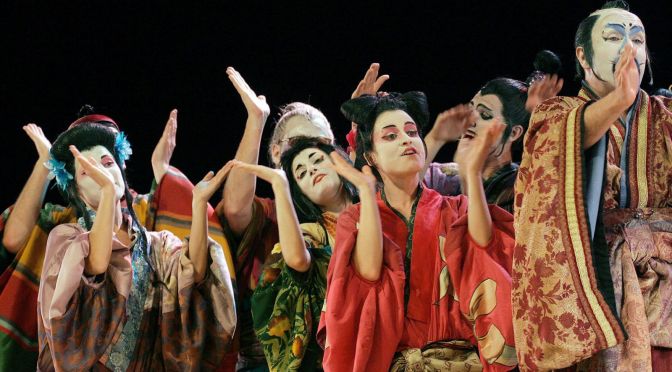
Written in May 2015 Wrote this in order to explore casting issues related to representation of Asian/Asian-American characters (and actors) in both stage and cinema, with particular attention paid to the “whitewashing” trend that has become rather prevalent in film (as well as theater) and seems to have risen out of a desire to replace the deemed more offensive “yellowface”.

Borrowed Faces: The Effect of Whitewashing Asian Roles in Theatre and Cinema

We speak of actors and then of ethnic actors, as though they were of different kinds…If someone said, ‘I saw a terrific white play last night,’ it would sound ludicrous.  Why is it acceptable the other way around?  It is time to recognize all artists as individual artists first, apart from categories that only serve to limit our imaginations.

 – Harry Newman

Though steps have been taken to move away from overtly racist practices such as “yellowface” on stage and in film, a visible lack of Asian or Asian-American representation continues to exist in both media.  When Asian or Asian-American actors are given roles, they usually maintain the same stereotypical ideology that has been dominant for decades.  But more often the presence of minority characters are “whitewashed” out of the cast entirely, a trend that has risen out of an apparent desire to replace the deemed more offensive “yellowface”.  Whether “whitewashing”, however, is indeed better and less offensive than “yellowface” is still questionable.  Although arguments in defense of “whitewashing” rationalize its existence and deny it being a discriminatory practice, it has the potential to be even more damaging than “yellowface” in terms of perpetuating stereotypical representation of Asian or Asian-Americans as well as depriving minority actors of valuable opportunity. Continue reading PAPER: Borrowed Faces

PAPER: Living Wood and Still Bodies

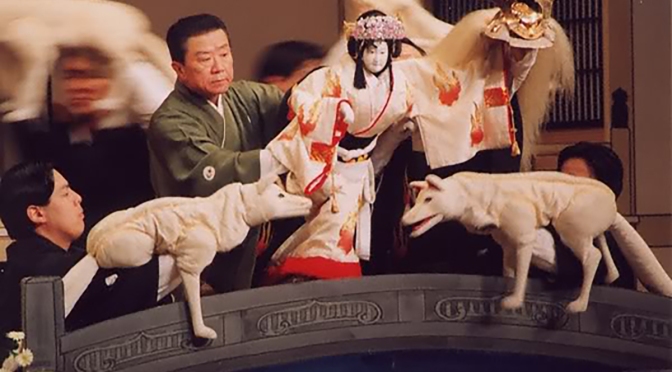
Written in December 2014 Wrote this after studying the Bunraku and Kabuki theaters, specifically the relationship of influence each theater form has (or had) on the other, from a historical, aesthetic, and performative context.

Living Wood and Still Bodies: Analyzing the Relationship Between Bunraku and Kabuki

When considering the variety of theatre the world has to offer, few have such spectacular a tradition or are as recognizable as the Kabuki and Bunraku theatres of Japan. While historically the two art forms were highly competitive with one another, scholars have argued for one art form being the more or less direct influence of the other for years. Upon studying the historical factors, visual aesthetics, and movement styles of both forms, however, it becomes apparent that discussion of this topic cannot be as clear cut and dry as some of these scholars make it out to be. Continue reading PAPER: Living Wood and Still Bodies

PAPER: With the Heart of a Human

Written in November 2010 Wrote this for a course I took on Japanese theater in-depth analysis of Noh styles and construction using a specific, unique play.

With the Heart of a Human: An Analysis of the Nue as the Shite

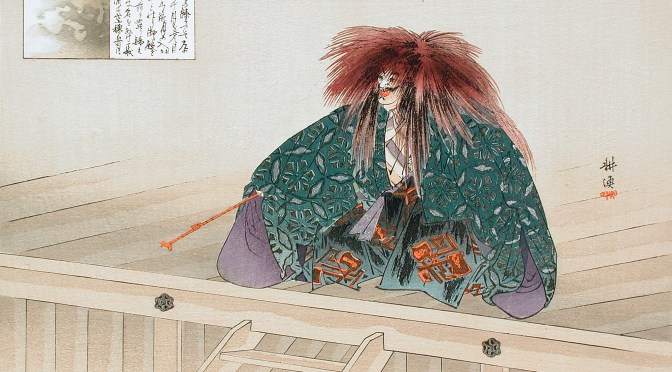
Zeami’s works are characterized by a fine lyrical sensibility, and the Noh play Nue is no exception.What is unusual, however, is that it is spoken through the mouth of a demon, the nue monster that gives the play its name. By altering the perspective and narration of the original text found in the Tale of the Heike for his Noh play adaptation Nue, Zeami effectively sets the audience up to be sympathetic toward the nue creature and allows for its emotions to become the central focus of the play. This creates a very memorable character out of the nue, which despite being a demon exhibits a certain humanness, allowing the audience to connect and empathize with the nue. Continue reading PAPER: With the Heart of a Human

PAPER: Clashing Swords

Written in May 2012 Wrote this as part of my independent study project on East Asian Cinema. WARNING: Possible spoilers for the films!

Clashing Swords: The War Between Nationalism and Commercialism in Zhang Yimou’s Wuxia Films

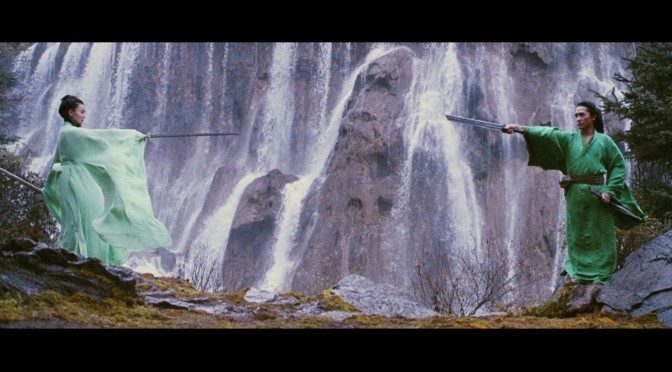
Wuxia, which roughly translates as “martial chivalry”, is a distinct genre in both Chinese literature and cinema. Typically, the heroes in Chinese wuxia fiction do not serve a lord or wield military power and are often from the lower social classes of ancient Chinese society. Usually they are bound by a code of chivalry that requires them to right wrongs, especially when the helpless or the poor are oppressed and are characterized by a flying fighting style. Along with international successes such as “Crouching Tiger, Hidden Dragon”, director Zhang Yimou’s contributions to the wuxia genre, namely “Hero” and “House of Flying Daggers”, have ignited a strong interest worldwide. Continue reading PAPER: Clashing Swords

PAPER: She’s the Man

Written in May 2011 Wrote this after studying Kabuki and Takarazuka theaters and their unique acting roles, namely the onnagata and otokoyaku, and the interpretations of gender through their performances.

She’s the Man: Performing Gender in Kabuki and Takarazuka through Kata

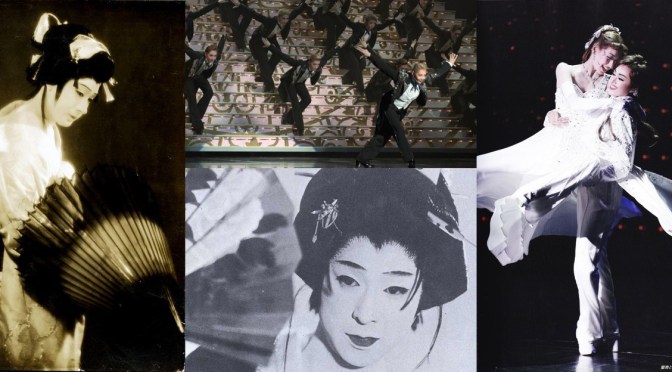
Of all the theatre forms in the world, there are few as mystifying and fascinating as those found in Japan, especially the highly stylized Kabuki and Takarazuka. What is it about the Kabuki and Takarazuka aesthetics that attract their respective audiences? More than the music, the dancing, the romance, or the lavish spectacle, it is the male-role specializing otokoyaku in the all-female Takarazuka theatre and the female-role specializing onnagata in the all-male Kabuki theatre that draws spectators. Both of these actors demonstrate that gender is not connected to one’s sex, but is a performance. A performance which requires the learning of a highly stylized set of patterns known as kata, by which the onnagata in Kabuki and the otokoyaku in Takarazuka learn to exude femininity and masculinity respectively, as well as become more elegant, graceful, and attractive than a “real” woman or man ever could. This in turn affects the audience’s perception of gender for both male and female spectators and demonstrates the cultural difference between Japan and the West when defining “femininity” and “masculinity.” Continue reading PAPER: She’s the Man