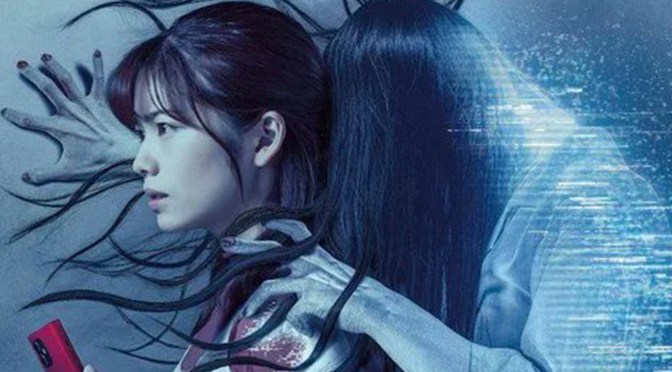
Although the trailer has been out for over a month now, given that my doctoral dissertation was all about feminine vengeful spirits in Japanese theatre and cinema, I feel almost obligated to make a post about the latest “Sadako” film in the Ringu (リング) franchise.
Directed by Kimura Hisashi (木村ひさし) and scheduled to be released in fall later this year, Sadako DX promises new innovations to one of the greatest J-horror film franchises in Japanese cinema.
Had a fun talk with Antonio (Tony) Vega discussing onryō (怨霊; “vengeful/wrathful ghost”) in the context of Japanese religion/folklore, theatre, as well as contemporary J-horror cinema. Feel free to give it a listen!
Tony’s podcast Japan Station is focused on discovering Japan through conversations with a guest featured on each episode. His podcast covers all aspects of Japan, including the Japanese language, history, Japanese pop culture, food, anime, manga, movies, music, comedy, the impact of Japanese culture around the world, underground social movements, social issues in Japan, and much more.
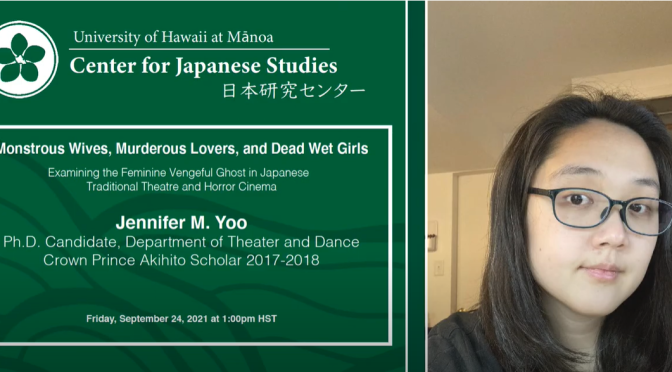
Had the wonderful opportunity to talk and present my doctoral dissertation research as a part of the University of Hawai‘i at Mānoa’s Center for Japanese Studies (CJS) lecture series for Fall 2021.
This event was held on Zoom and was co-sponsored by CJS and the Department of Theatre and Dance at UH Mānoa. Q&A was moderated by my doctoral advisor, Professor Julie A. Iezzi.
Original Air Date of Webinar: Friday, September 24, 2021
ABSTRACT: As in many cultures, woman is often portrayed as monstrous or evil by sheer fact of her being female. Today, no Japanese horror film is considered complete without its haunting woman specter, the female onryō, or “vengeful ghost” archetype. Barbara Creed’s writings on the “monstrous feminine” illustrates an innate connection of “affinity” between woman and monster as “potent threats to vulnerable male power.” Although when writing Creed was referring to Western horror cinema, the same theories can be extended to Japanese media.
By analyzing the narrative style, visual representation, and enactment of this archetype found in Japanese theatre forms nō and kabuki compared to Japanese horror films, it becomes apparent that the female onryō reflects views of the feminine identity in Japanese society. Contrary to the portrayal of the male, only once these women have become “monstrous” can they break free from sociocultural limitations and act on their vengeance. Their frightening and grotesque forms, however, invoke more terror and horror than sympathy, transforming the victims into the villains.
Despite the change in norms of Japanese society over time, the way these female onryō are presented remains arguably consistent, positioning them as more “monsters” and “freaks” rather than women. More significant is the tendency to associate these characters with feminine traits or behavior, thereby transforming them into something grotesque, extending the association of horror to woman herself. In so doing, the female onryō may have helped serve as a means of patriarchal control prescribing women’s behavior, perhaps explaining its continued prevalence.
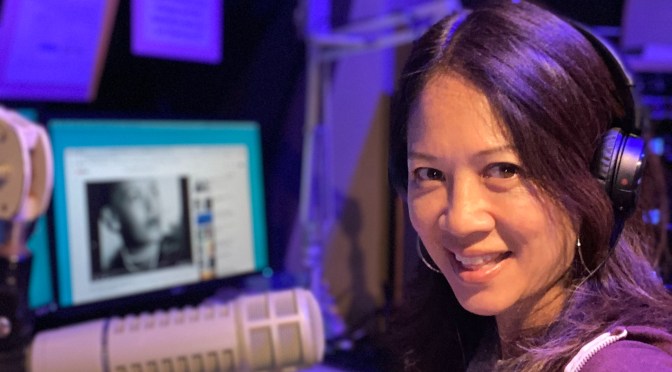
Had a lovely interview with Crystal Kwok (pictured above) where we discussed the representation of women in Japanese horror films. Feel free to give it a listen!
Crystal’s talk show Kwok Talk (KTUH Online) focuses on socially sensitive issues including gender and race with a multi-cultural perspective.




 Panda Samurai