Category Archives: Recipes

Will You Be Mine? Making Chocolate for Valentine’s Day.

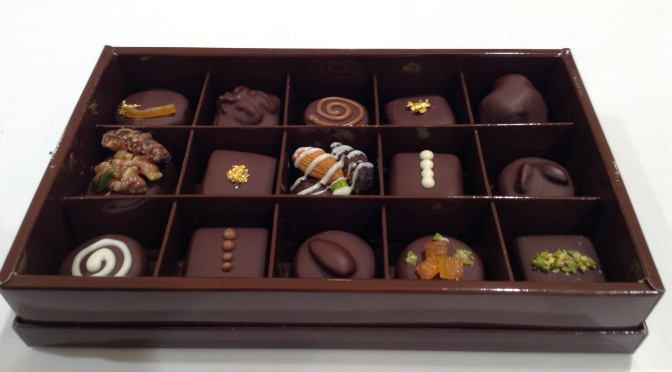
Russell Stover. Godiva. Lindt. It’s hard to beat standards like a box of chocolates as a gift for Valentine’s Day. Even today more than one billion dollars are spent on chocolates for this romantic holiday in the United States alone. In Japan,  it is a tradition for women to give chocolate to men on Valentine’s Day. There are generally two (now three) types of chocolate given: giri-choco (義理チョコ), or “obligatory chocolate,” honmei-choco (本命チョコ), or “true feelings chocolate,” and now recently tomo-choco (友チョコ), or “friendship chocolate.”

While the meaning behind honmei-choco and tomo-choco are pretty self-explanatory, the practice of giri-choco has become an increasingly contentious issue. In some workplaces, giri-choco has even been banned as it compels women to gift chocolate to men and puts them under unnecessary stress; many women have shared that they have often pulled all-nighters on the eve of Valentine’s Day to make enough for all of the men they had to give chocolate to. There have even been cases where the practice has been discouraged as many men have expressed that they do not even want chocolate, especially as it is widely expected for such gifts to be reciprocated a month later on White Day, when it is tradition for men to present gifts to women. As a result, more and more often women have purchased inexpensive candy bars as giri-choco rather than pricey brand-name gifts, fewer still make them by hand. In the case of honmei-choco (and sometimes even tomo-choco), however, many women make these chocolates themselves as it is commonly held that one’s feelings are not true if they are in the form of ready-made, store-bought chocolate.

Why not make a sweet gift like no other yourself this year? By following these simple tips, you can not only tailor your selection of chocolates to your intended’s tastes, but you can also leave an impression that he or she will not forget for quite some time!

Continue reading Will You Be Mine? Making Chocolate for Valentine’s Day.
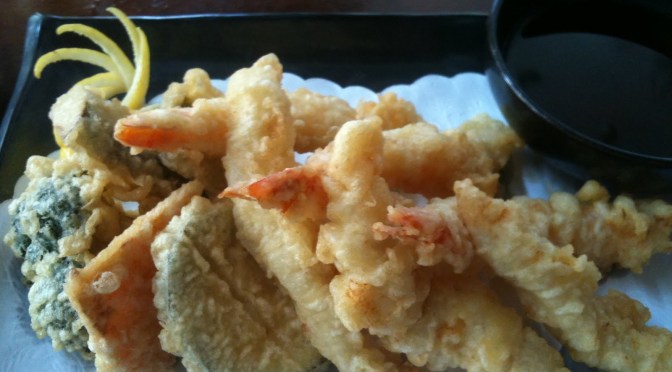
RECIPE: 野菜の天ぷら – Vegetable Tempura

How to Make Vegetable Tempura

Ingredients

  •  ¼ cup Kaeshi 
  • 2 cup Dashi
  • Tempura Flour
  • Vegetables, Sliced or Cut into small pieces (can be whatever you like!)  Here are some of my personal recommendations:  Broccoli, Asparagus, Carrots, Zucchini, Mushrooms…
  • Canola Oil or Vegetable Oil for Deep-Frying

Directions

  1. For the dipping sauce, heat the kaeshi and dashi over medium heat until it comes to a gentle simmer.  Turn off the heat and divide the sauce into 4 small bowls.
  2. Heat the oil in a wok or a deep pot (about 4 inches deep) to 340 degrees Farenheit.
  3. Prepare the tempura batter by mixinh ½ cup flour with about 6 tablespoons cold water.  The texture of the batter should be similar to crepe batter.
  4. Dredge the vegetables in (dry) tempura flour, then dip each into the tempura batter.  Shake gently to remove excess batter and then drop into the heated oil.  Vegetables should cover only half of the surface area of the oil.  Wait for them to rise to the top of the oil and cook until lightly golden and crisp.
  5. When finished, take out of the oil and let it rest on a plate covered with paper towels to soak up the excess oil.  Remove paper towel, and serve on plate with a bowl of dipping sauce on the side.
  6. Tempura is best eaten quickly before it gets soggy, so once prepared, make sure to enjoy it right away!

RECIPE: みたらし団子 – Mitarashi Dango

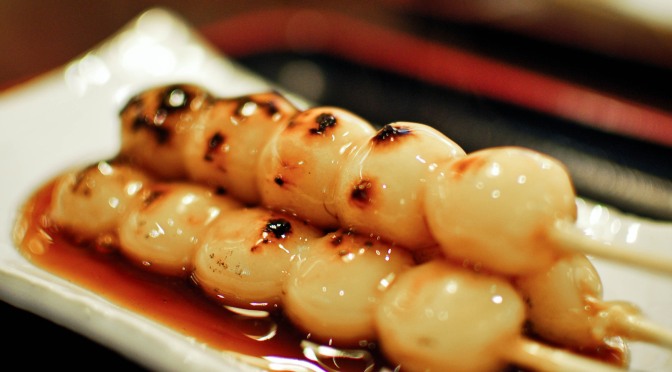
A popular Japanese sweet served in tea shops and in stalls for festivals, mitarashi dango is a kind of dango “dumpling” sweet skewered in groups of 3 to 5 pieces, covered with a sweet soy sauce glaze.  It is characterized by its glaze and slightly burnt fragrance.

My version of mitarashi dango is a bit of a “cheat” and is designed to be easy to make.  Unfortunately it is also pretty easy to screw up so it might take a few tries to get the hang of it and produce the desired result.  But don’t give up, because these are extremely tasty!

How to Make Mitarashi Dango

Ingredients (Makes 8)

Dango:

  • 1 cup Mochiko (Sweet Rice Flour)
  • Water

Sauce:

  • ½ cup Water
  • 6 tablespoons Sugar
  • 2 tablespoons Soy Sauce
  • 1 tablespoon Potato Starch

Directions

  1. In a microwaveable bowl, add the mochiko rice flour and slowly add water little by little to make a smooth dough.  BE VERY CAREFUL NOT TO MAKE THE DOUGH TOO WATERY.
  2. Roll into a long cylinder and cut into 24 pieces.  Roll into small balls or dango, about 1 inch in diameter.
  3. Boil water in a pot and add the dango.  After they come up to the surface, let them cook 1 more minute, then scoop them out into a colander to drain and cool slightly.
  4. For the sauce, combine water, sugar, and soy sauce in a sauce pan and bring to a boil.  Make a slurry with the potato starch and 1 tablespoon of water, and drizzle into the sauce.  Quickly whisk until it thickens.  Feel free to adjust the proportions of soy sauce, sugar, etc. to your tastes.  You can also make the sauce thicker or thinner by adjusting the water and potato starch.
  5. Twist and slide the dango onto skewers (3 for each skewer) and place them on a plate.  Pour sauce over them and serve.  ALTERNATIVELY, you can grill the skewered dango over a wire frame until they just start to burn a little on both sides, dip them in the sauce and serve.


RECIPE: 牛丼ぶり – Gyuu Donburi

You may often see family restaurants and fast food joints in Japan serving gyuu donburi, or gyuudon, but why not try making it for yourself?

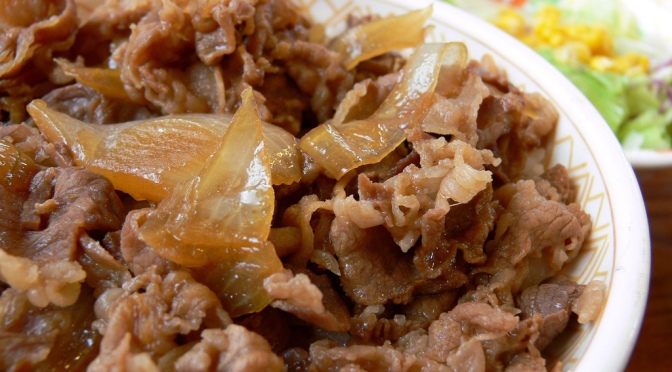
Gyuudon is a form of donburi dish.  Don literally means “rice bowl”, buri is the act of putting something on top.  In other words, donburi is a rice bowl dish with something put on top of the rice.  And gyuudon is an extremely popular type of donburi in Japan. The gyuu in gyuudon means “beef”.

How to Make Gyuu Donburi

Ingredients (Makes 3)

  • 1 ½ cups Short Grain or Medium Grain White Rice
  • 1 ¼ cups Dashi
  • 2 tablespoons Sake (for cooking)
  • 3 tablespoons Mirin
  • 1 ½ tablespoons Sugar
  • 1 Medium Onion, Cut into thin wedges
  • 7 ounces Sirloin Beef, Cut into thin strips
  • 3 tablespoons Soy Sauce
  • 3 Eggs, Lightly beaten

Directions

  1. Rinse the rice.  Soak the rice in cold water for 30 minutes to an hour (not required, but it does make the rice taste better).
  2. Drain the rice’s soaking water and add back 1 ¾ cups of cold water.  Cook the rice in a rice cooker if available.  If not, cook in a heavy-bottomed pot and follow the instructions written on the rice package.
  3. Meanwhile, combine the dashi, sake, and mirin in a medium skillet, and bring the mixture to a boil over medium heat.
  4. Add the sugar, stir until it dissolves.  Reduce the heat to low, and cook for 5 minutes.
  5. Add the onion, and cook until it is soft, approximately 3-5 minutes.
  6. Add the beef, and cook for 2 minutes.
  7. Add the soy sauce and cook for 2-3 additional minutes.
  8. Pour the eggs over the beef and onion and cook, covered for 1-2 minutes.
  9. Divide the cooked rice among 3 individual large bowls and top with the beef, onion, and egg mixture.
  10. Pour a generous amount of the remaining cooking broth over each serving.  Serve the dish while hot and enjoy!

RECIPE: アンパン – Anpan

A personal favorite, anpan is a Japanese bread (pan) filled with sweet red bean paste (an).  It is particularly popular with young children due to the character “Anpanman”.

Anpanman

My version of anpan isn’t 100% authentic, as some of my native Japanese friends have described them as more “buttery” than the anpan they are used to.  Despite this, however, they have also said that it’s some of the best anpan they have ever had.

I’ve made my anpan this way over half a dozen times, and each time it has not failed to be a hit with friends and family.  Please give it a try!

How to Make Anpan

Ingredients (Makes 12)

  • 3 cups All-Purpose Flour
  • 2 teaspoons Yeast
  • 4 ½ tablespoons Sugar
  • 1 ½ Egg
  • 1 cup Water
  • 1 teaspoon Salt
  • 3 ½ tablespoons Butter
  • 1 can of Koshi-an (Smooth Red Bean Paste)

Directions

  1. Put the flour, yeast, sugar, and half the egg in a bowl. Add the water.
  2. Turn the mixture out onto a floured board and knead for about 15 minutes.
  3. Sprinkle in the salt and knead some more. Add the butter a little at a time, folding over to create layers. Knead another 15 minutes.
  4. Let rest for 50-60 minutes. At the end of the 50-60 minutes, poke with your finger into the middle of the dough. If it stays down, the dough is ready.
  5. Flatten dough to press out air, and cut into about 12 pieces. Roll into balls, and place under a towel for about 10 minutes.
  6. Flatten a ball of dough in the palm of your hands, place a small scoop of koshi-an in the center of the dough and then gather all sides and pinch them together in the middle. When sealed, roll gently between your palms to make it round and put the sealed side onto your baking sheet.
  7. Repeat until all the dough and koshi-an is used up.
  8. Leave under a towel for another 40 minutes. When finished, coat the top of each anpan with the remaining egg.
  9. Preheat your oven to 400 degrees Farenheit and bake for 8-12 minutes.
  10. These taste good hot or cool, but give them some time to cool a little out of the oven if serving while still warm because the red bean paste can get extremely hot and burn one’s mouth/tongue.


RECIPE: お好み焼き – Okonomiyaki

It’s been a while since I’ve made okonomiyaki, but I found myself in the mood today.

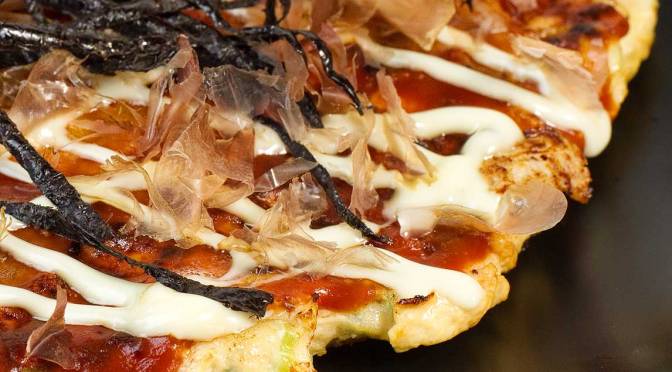
For those who don’t know, okonomiyaki is a Japanese savory pancake containing a variety of ingredients. The name is derived from the word okonomi, meaning “what you like” or “what you want”, and yaki meaning “grilled” or “cooked”. In other words, okonomiyaki are “whatever you want” pancakes, so the ingredients can vary depending on one’s tastes.

Okonomiyaki is mainly associated with Kansai or Hiroshima areas of Japan, but is widely available throughout the country. Toppings and batters tend to vary according to region.

As I said before, okonomiyaki can technically contain anything, but here is how I prefer to make mine.  Feel free to adjust the Filling section with whatever you like!

How to Make Okonomiyaki

Ingredients (2 servings)

For Pancake Batter:

  • 1 cup Cake Flour
  • 1 cup Water or Dashi (kelp and fish stock)
  • ½ teaspoon Salt
  • 2 tablespoons Potato Starch
  • 2 eggs
  • 2-3 tablespoons Vegetable Oil

For Filling:

  • 2 ounces Beef Sirloin, Cut into thin strips
  • 2 ounces Pork Sirloin, Cut into thin strips
  • 3 ½ ounces Napa Cabbage, Shredded
  • ¼ cup Green Scallion, Cut thinly

For Sauce/Toppings:

  • Tonkatsu Sauce
  • Mayonnaise
  • 1 sheet Nori (roasted seaweed), Crumbled or cut into small pieces
  • ¼ cup Katsuoboshi (bonito flakes)

Directions

  1. Sift the flour into a bowl.  Add and mix  the water or dashi, salt, and potato starch, stirring.  Divide the batter between two bowls.
  2. Put half the beef, pork, cabbage, and green scallion into each bowl.  Break the eggs and drop one in the center of each bowl.
  3. Heat a large skillet, add vegetable oil and swirl the skillet to coat the entire bottom.  When the oil is hot, reduce the heat to medium.  Mix the batter and the other ingredients in one of the bowls and pour all of the batter in that bowl into the skillet. Spread the batter into a large disk.  Cook the pancake over medium heat until bottom is golden.
  4. Turn the pancake over with the aid of two spatulas, press it to flatten the bottom, and cook the other side until golden.
  5. Prepare the second pancake in the same way as the first.
  6. Spread mayonnaise over the top of each pancake, then tonkatsu sauce.  Sprinkle half of the nori and katsuoboshi on top.
  7. Serve them hot and enjoy!