
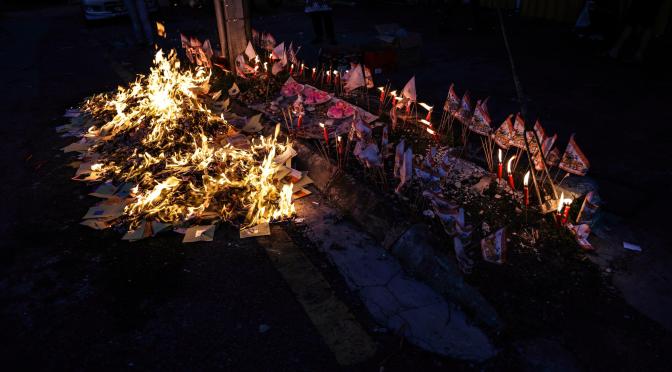

Although the month of guǐ yuè (鬼月) or Ghost Month is considered to be a highly superstitious and supernatural period overall, there are certain points in the month that are considered especially important when it comes to being mindful of the spirits believed to be freely roaming the world of the living. The foremost of which takes place on the 15th day of the month, which according to the Chinese lunar calendar takes place today, August 18th, this year. It is on this day that spiritual activity is believed to be at its peak.
This day is so significant that it is often distinguished from the rest of the month by being referred to as the “Hungry Ghost Festival” (sometimes just “Ghost Festival”), although this name is occasionally used for the entire month’s festivities.
Feeding the “Hungry” Ghosts
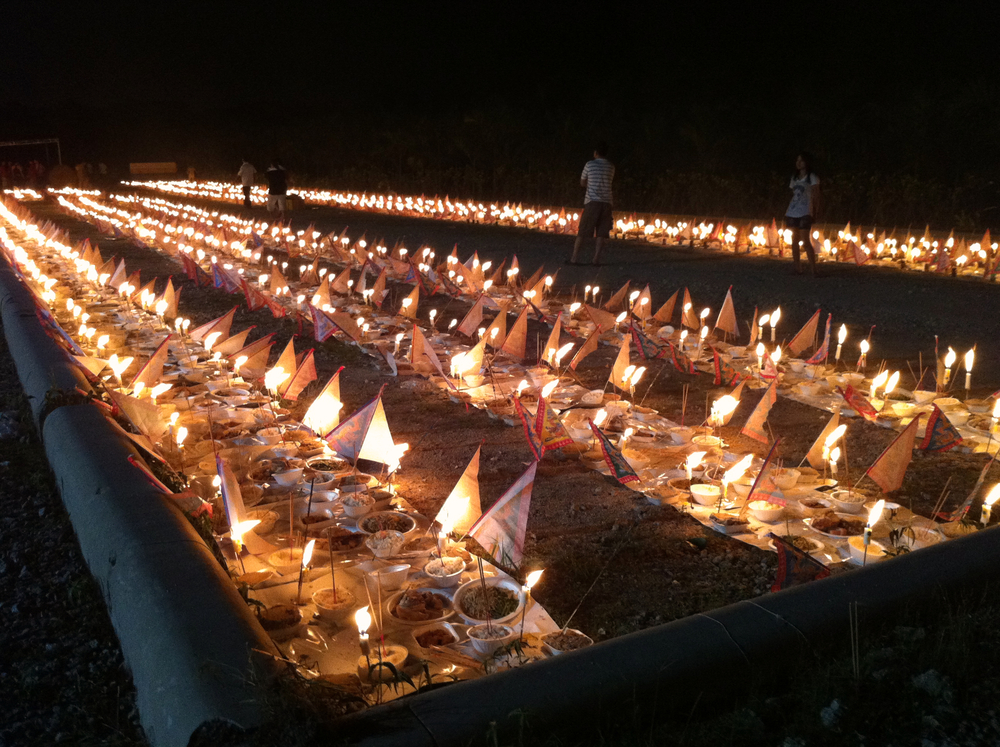
It is on this day of all the days of Ghost Month that the offerings to spirits, be it one’s visiting ancestor(s) or a wandering ghost, must be as grand as possible. It should be noted that all ghosts or guǐ (鬼) are thought to be hungry to some degree, and so the festival is meant to apply to all ghosts, not just the spirits specifically known as “hungry ghosts” or è guǐ (餓鬼), which is an inherently Buddhist term (more on that later).
As a result, particular attention is paid to “feeding” spirits, with families laying out a feast for ancestral spirits in their homes as often as three times throughout the day. Out on the streets, people make sure that food is laid out and the altars are fully stocked so that any ghosts without a home or family to pay them respect may be satisfied, thereby warding off misfortune.
Origins of the Hungry Ghost Festival
According to Chinese folklore, the origin and significance of the Hungry Ghost Festival differ based on Taoist and Buddhist belief. This is reflected in there being different names for the festival in Chinese – mainly zhōng yuán jié (中元節) in Taoism or yúlánpén jié (盂蘭盆節) in Buddhism.
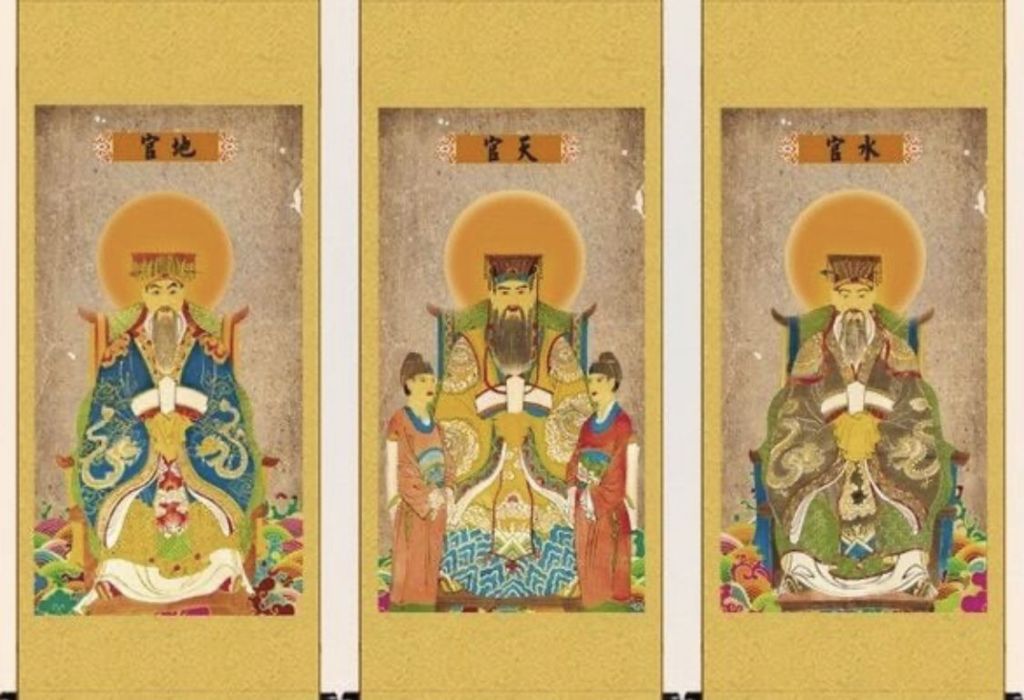
The characters zhōng yuán (中元) in zhōng yuán jié more or less literally translate as “middle beginning” and are taken to symbolize the middle of Ghost Month (as in the 15th day). The Taoist significance of zhōng yuán jié is tied to the belief in the “Three Great Emperor Officials” or sānguān dàdì (三官大帝) who are thought to be three of the highest ranked deities within Taoism, second only to the Jade Emperor himself.
Together these three gods are believed to wield great power over humanity and each “Official” is therefore commemorated on their respective birthdays and given their due respect. For the “Heavenly Official” (pictured below in the center scroll) or tiānguān dàdì (天官大帝), who is believed to bestow blessings and happiness, his birthday falls on the 15th day of the first month of the Chinese lunar calendar which is known as shàng yuán jié (上元節), more popularly known as the “Lantern Festival.” The “Water Official” (pictured below in the right scroll) or shuǐguān dàdì (水官大帝), known to eliminate misfortune by alleviating dangers or disasters, is celebrated on xià yuán jié (下元節), which takes place on the 15th day of the tenth month. Lastly, the “Earthly Official” (pictured below in the left scroll) or dìguān dàdì (地官大帝) is believed out of the three to be most responsible for absolving sins, and on his birthday on the 15th day of the seventh month is known to descend to earth to record the good and evil deeds of every human being.
This is believed to be the Taoist origin for zhōng yuán jié, which traditionally was a time when Taoist priests would perform rites and make food offerings to the Earthly Official while devotees would pay their respects at temples and repent their sins. Eventually celebrations shifted from people praying not so much for their personal sins but to absolve the sufferings of the dead, especially of wandering spirits.
In contrast, the characters yúlánpén (盂蘭盆) in yúlánpén jié are a transliteration of the Ullambana Sutra, which largely concerns filial piety. In Chinese, yúlán (盂蘭) roughly translates as “to hang upside down,” while pén (盆) is understood to refer to a container for offerings. Together, yúlánpén thus is thought to symbolize a container filled with food offerings to save one’s ancestor(s) from being suspended in suffering in Buddhist purgatory.
According to Chinese Buddhism, the origins for the Hungry Ghost Festival trace back to the account detailed in the Ullambana Sutra of the Buddhist disciple Maudgalyayana, known in Chinese as Mùlián (目连), and his efforts to save the tortured soul of his mother, who had become an è guǐ or “hungry ghost.” Known as preta in Sanskrit, these ghosts are typically depicted as being ravenous apparitions and having large, distended stomachs but throats that are too thin for food to pass through.
The story of how exactly Mùlián’s mother became a hungry ghost varies, the traditional version being that despite her son’s virtuous nature, the mother herself was a wicked woman who had been far too greedy and stingy in life, never feeling the slightest bit of charity toward anyone, and so was punished by being left to suffer from insatiable hunger in death. This aligns with the commonly held belief in Chinese folkore as to how people might end up becoming è guǐ. In another popular version, however, the mother was both virtuous and devoutly Buddhist, meaning she was also a strict vegetarian. Unfortunately, she ended up unknowingly consuming a soup that contained meat and was condemned for willfully denying having eaten any meat.
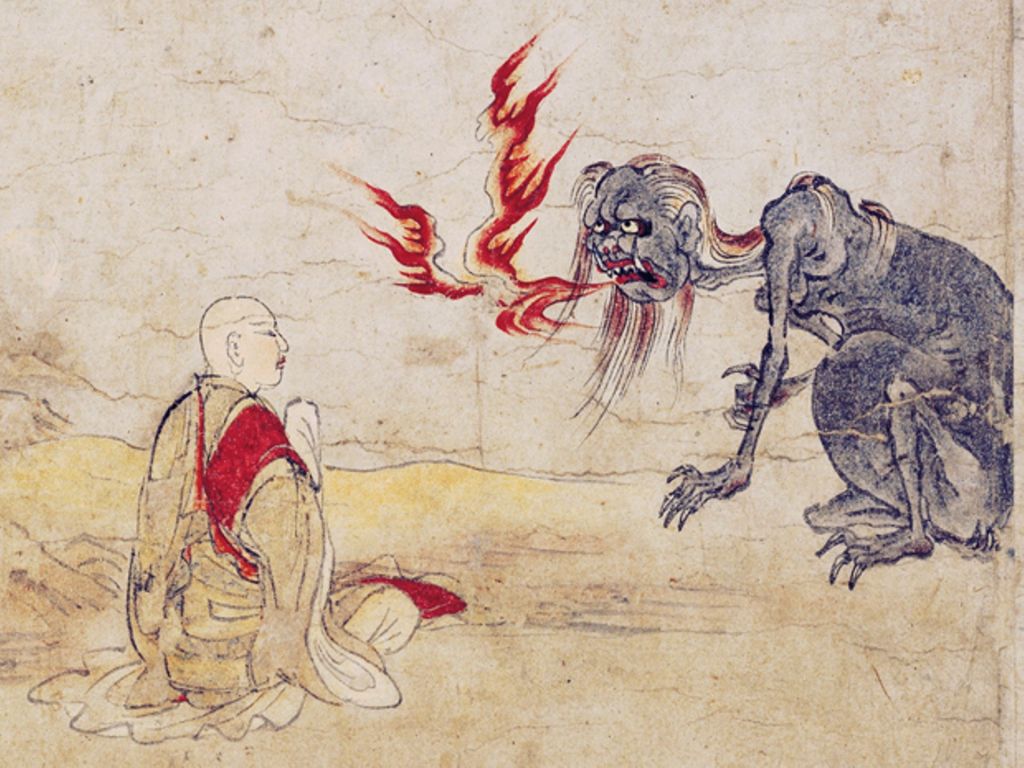
Regardless of the circumstances that brought about her punishment in hell, Mùlián is seen making numerous attempts in the Ullambana Sutra to try and ease his mother’s suffering by satisfying her hunger. He desperately tries to feed her numerous times, but the food either is snatched away by other è guǐ suffering in hell or turns into flaming coals before it even makes it past her lips. Even when his attempts to feed her are successful, it only succeeds in making her hungrier, thus intensifying her torture.
At a loss, Mùlián turns to the Buddha for guidance, who imparts on his disciple the knowledge that one could alleviate the suffering of their parents and/or ancestors by making special prayers and offerings of food on a particularly auspicious day, which falls on the 15th day of the seventh month of the lunar calendar. Only after following the Buddha’s instructions was Mùlián’s mother finally satisfied and freed from her tortuous hunger as an è guǐ. This is believed to be the Buddhist origin for yúlánpén jié, especially the tradition of making offerings and prayers to one’s ancestral spirits during the Hungry Ghost Festival.
 Panda Samurai
One thought on “Chinese Folklore: The Hungry Ghost Festival”