
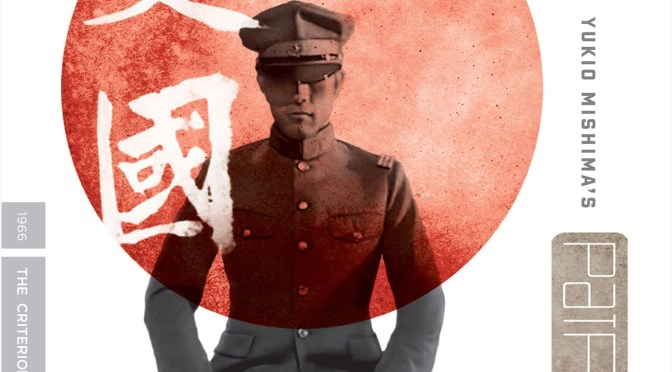

Written in December 2011 Wrote this paper based on my personal interest in Mishima Yukio's works, namely his short story "Patriotism" which he later adapted for film that he wrote, directed, and starred in as the lead role and how both works express Mishima's personal ideals and beliefs.
Mishima Yukio’s “Patriotism”: Of Death, Purity, Honor, and Love
“Patriotism” is known to have been a story of personal significance to author Mishima Yukio, as he had expressed on multiple occasions how much of himself he had thrown into this particular story: “[Patriotism] embodies so many of my qualities as a writer, both the good and the bad.” The fact that it is also the only work that Mishima handled personally when adapting it for film, as in directed, produced, wrote the screenplay, and starred in as lead actor, is testament to how important it was to him. The film “Patriotism”, however, is not much of an adaptation in the conventional sense, and more of an expression of Mishima’s personal ideals and beliefs. Especially in regards to Mishima’s views on the intimate relationship between death and “beauty”, which he considered synonymous with love, sex, and purity. In both the story and the film, it is clear Mishima wanted to portray the act of seppuku as both “an act of beauty” and a purifying ritual.
The most distinctive difference between the story and the film “Patriotism” is the setting. While the story is placed in a traditional Japanese home, Mishima chose to have the film set on a Noh stage. Mishima Yukio had had a history performing on the Japanese traditional stage, having written several Kabuki as well as Noh plays, but he chose to have “Patriotism” performed on a Noh stage for very specific reasons. The first reason was simplicity. Mishima believed that if the film were portrayed in the same way it is described in the story, the necessary props would only detract from the scenes. According to Mishima, he considered “the naked body far less obscene than bedcovers and pillows.” Similarly, he chose to make “Patriotism” a silent film to avoid corrupting the poignancy of the actions that were to take place before the viewers’ eyes with dialogue and sounds. The story is directed purely through intertitles and physical movement. Through this minimalist approach, he was able to present “Patriotism” in its simplest and purest form.
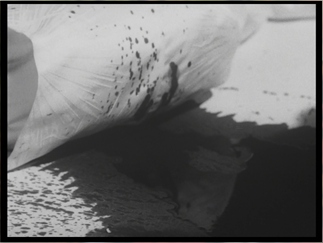
The second reason Mishima chose the Noh stage for his film was to emphasize purity. The Noh stage has always had a strong connection with religion; the stories told often have Buddhist connotations and the construction of the stage used itself resembles a Shinto shrine. He wanted the events of “Patriotism” to be considered something as pure as a ceremony, which is evident in the fact that he referred to the story as “The Rite of Love and Death” in the film. According to his production notes, Mishima intentionally chose a space that was “unsullied by blood” where “the rite of love and death” could take place. The concept of purity is further emphasized by the sheer nature of the film being shot entirely in grey tone. Mishima had the entire stage painted white to heighten this contrast; “black would only be used to represent blood.”
 Panda Samurai