
Obon, the Festival of Lanterns
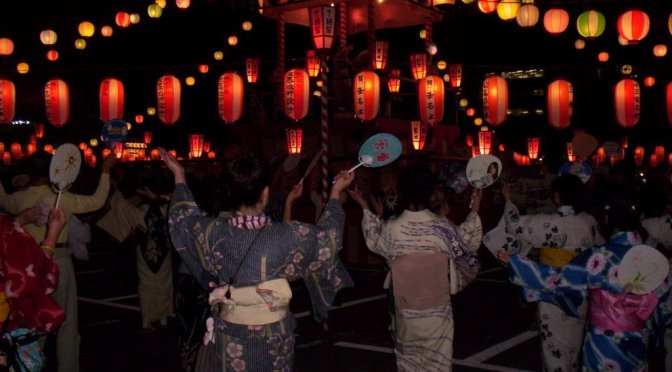
Every summer, people of all ages and religious backgrounds come together, often dressed in yukata, light cotton summer kimono, to celebrate being alive and honor those who have passed on, known as Obon.
The Obon festival, also popularly known as the “Festival of Lanterns”, is a 500-year-old tradition rooted in Japanese Buddhism belief that ancestral spirits return to their homes from the world of the dead during this particular time of year to be with their families.
Traditionally, families light lanterns to welcome and show their ancestors the way home as well as place offerings in the form of food, drinks, and flowers at their graves. 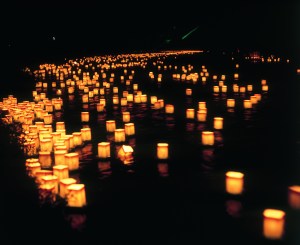 The biggest attraction to Obon celebrations, however is the festive and family-friendly atmosphere filled with music, dance, food and good-natured fun. Usually set in the courtyards, lawns, or parking lots of Buddhist temples, families come together to savor some delicious food from the many stalls, play games, and immerse themselves in the lively rhythm of taiko drums.
The Significance of Bon Dance
One of the big highlights of celebrating Obon is taking part in the group line dances, known collectively as Bon dance. The significance of dance in Obon is rooted in the religious origins which tell the story of a Buddhist monk who used his supernatural powers to look in on his late mother. When he saw that her spirit was trapped and suffering in the hungry ghost realm, he made offerings for her release and danced for joy at her ascension. Now the Bon dance has become a key aspect of Obon as a celebration of life and at the same time a tribute to the dead.
Rather than a specific dance like “The Macarena”, however, Bon dance is better considered a style of folk dancing, with a wide repertoire of different songs. Most dances are organized in circles around striking elevated stages called yagura where music troupes perform live music under canopies of paper lanterns. While everyone is welcome to participate in the dancing and most of the dances are relatively easy to pick up by following along, it might be a bit intimidating for some to throw themselves into the circle and learn the steps on the fly.
Tankobushi, the “Coal Miner’s Song”
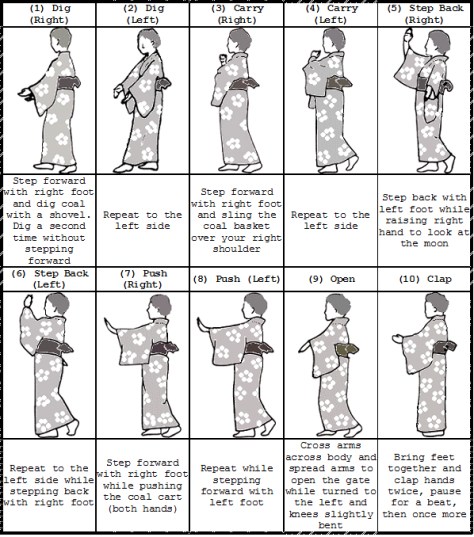
The most popular and simplest of these Bon dances is Tankobushi, which translates roughly to “The Coal Miner’s Song”. Regardless of which event you attend on the island, you are almost guaranteed to hear this song being played at least once. Learn the steps here so that you are ready to hop right in and be a part of the Obon festivities like a pro.
Like almost every Bon dance, everyone starts by standing in a circle, turned so that you are facing the back of the person next to you. When the music starts, clap twice, pause for a beat, then clap once more to signal the start of the dance. The rest is as follows:
 Panda Samurai